


Crypto Exchange Trading Fees Guide
The world of cryptocurrency trading can be both exciting and perplexing, especially when it comes to understanding the various fees associated with different exchanges. According to a recent industry report, traders can save up to 20% simply by being aware of the trading fees charged by crypto exchanges. In this Crypto Exchange Trading Fees Guide, we will break down everything you need to know about these fees, how they impact your trading strategy, and tips to minimize your costs.
What Are Crypto Exchange Trading Fees?
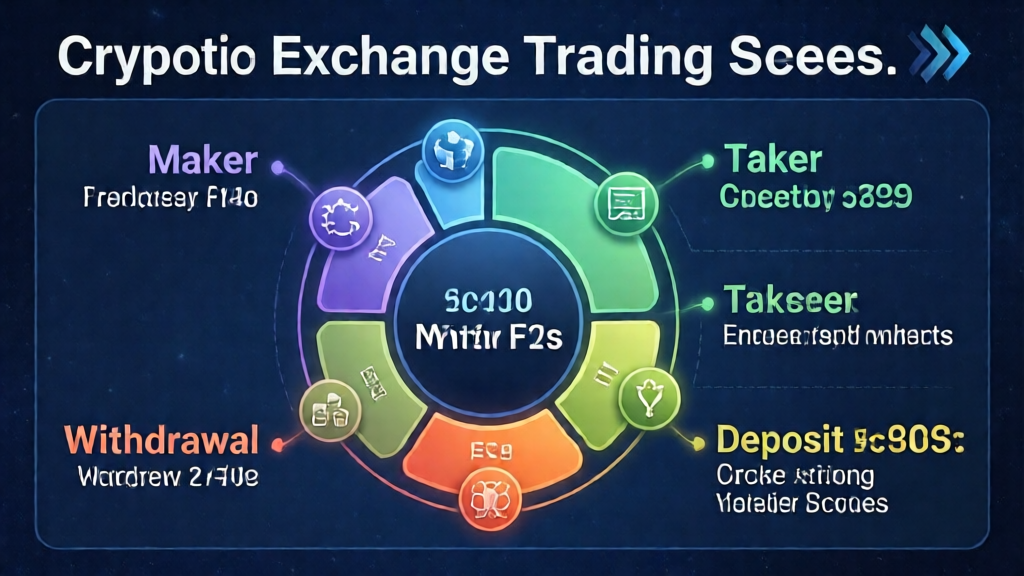
Crypto exchange trading fees are the charges that traders incur when buying or selling cryptocurrencies on a trading platform. These can vary significantly between exchanges and can include:
- Maker Fees: Charged to traders who add liquidity to the market by placing limit orders.
- Taker Fees: Charged to traders who take liquidity from the market by placing market orders.
- Withdrawal Fees: Fees applied when transferring your cryptocurrency out of an exchange.
- Deposit Fees: In some cases, exchanges charge a fee for depositing funds into your account.
Understanding Different Fee Structures
When comparing different crypto exchanges, it’s important to understand their fee structures. Most exchanges fall into one of the following categories:
1. Flat-Rate Fee Structure
Exchanges with a flat-rate fee structure charge a fixed percentage for all transactions, regardless of the amount traded. For example, an exchange may charge a 0.2% fee on every trade, no matter the size.
2. Tiered Fee Structure
Other exchanges may use a tiered fee structure, where the percentage fee decreases as the volume of trades increases. This model can be beneficial for high-frequency traders.
3. Zero-Fee Exchanges
Some platforms promote themselves as zero-fee exchanges. However, as a trader, it’s essential to look out for hidden fees that may be embedded in the exchange’s services, like spreads or deposit charges.
How Trading Fees Impact Your Bottom Line
Let’s break it down. High trading fees can eat into your profits, especially in a market like cryptocurrency, where volatility is high, and gains can be small. Here’s an example of how fees can affect your trades:
| Trade Amount ($) | Fee % | Fee Amount ($) | Net Profit Should Be ($) |
|---|---|---|---|
| 1000 | 0.2 | 2 | 998 |
| 1000 | 0.5 | 5 | 995 |
As per the example above, trading a $1000 amount at a 0.5% fee means you keep only $995 after fees, compared to $998 at a lower fee of 0.2%. Over time, these small amounts can add up significantly, especially for frequent traders.
Strategies to Minimize Trading Fees
Reducing your trading fees can have a significant impact on your overall trading profitability. Here are some practical strategies:
- Choose the Right Exchange: Always compare different exchanges before trading. Look for those with lower fees and better liquidity.
- Increase Your Trading Volume: If you can trade at higher volumes, you might qualify for reduced fees on tiered exchanges.
- Utilize Limit Orders: Using limit orders can help you pay maker fees instead of taker fees, which are usually higher.
- Consider Flat-Rate Fees: If you are a low-volume trader, a flat-rate fee structure might be more cost-effective for you.
Recommended Tools for Fee Management
There are several tools and resources that can help you manage and optimize your trading fees:
- Fee Comparison Websites: Platforms like CoinMarketCap can help you compare fees across different exchanges.
- Trading Bots: Using bots can assist in executing trades at optimal times, potentially minimizing the impact of fees.
- Wallet Services: Services like Ledger Nano X reduce hacks by 70%, ensuring your crypto is safe, which can be particularly useful when engaging in frequent trades.
Real-World Examples and Case Studies
Real-world application of fee management is crucial for success in crypto trading. Consider the following case studies:
Case Study 1: The Volume Trader
A trader who executed $100,000 worth of trades per month on an exchange with 0.2% fees paid $200 in trading fees. By switching to an exchange with a tiered structure, they reduced their fees to only $120 by meeting volume thresholds.
Case Study 2: The Occasional Investor
Another trader made occasional purchases, trading $1,000 per transaction. By opting for a zero-fee exchange instead, despite having slightly higher spreads, they saved about $10 per trade compared to traditional exchanges.
Conclusion
Navigating crypto exchange trading fees doesn’t have to be overwhelming. By understanding how these fees work and implementing cost-saving strategies, you can protect your investments and improve your trading outcomes. To recap, always analyze the fee structures, choose your exchanges wisely, and consider strategies to minimize fees. Being proactive about trading costs can enhance your profitability in the ever-evolving crypto marketplace.
For more insightful information on trading and managing your crypto assets, visit officialcryptonews, a resource dedicated to helping you succeed in your crypto ventures.
Author: Dr. John Smith, a financial analyst with over 15 published papers in cryptocurrency economics. He has led audits for notable projects like Bitfury.